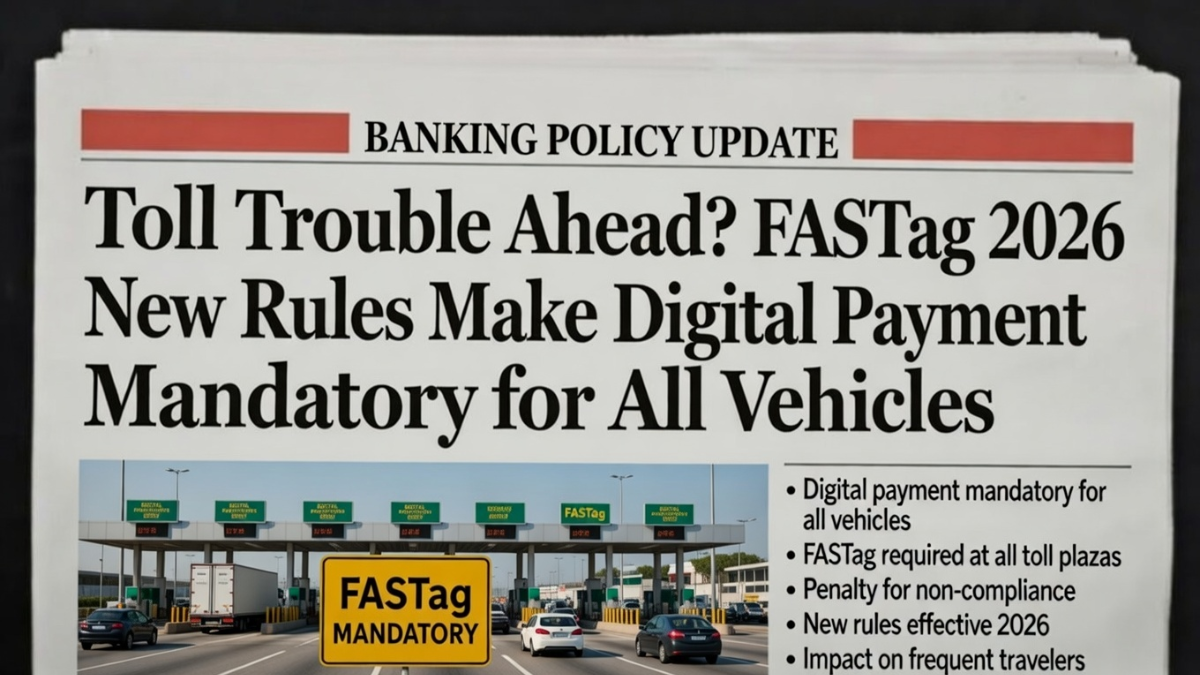
Highway travel in 2026 is getting a serious digital push. The latest FASTag 2026 rules are designed to tighten compliance, simplify activation, and expand digital toll benefits for vehicle owners across India. If you drive regularly on national highways, ignoring these changes could mean fines, delays, or double toll charges.
The updated framework, backed by regulators and digital payment authorities, aims to make toll plazas completely cashless and more efficient.
What Is Changing Under FASTag 2026 Rules?
FASTag remains a prepaid, RFID-based toll payment system linked to a vehicle’s registration number. The 2026 update strengthens mandatory compliance and simplifies onboarding for new vehicle owners.
The system operates under policies regulated by the National Highways Authority of India and supported by digital payment infrastructure managed by the National Payments Corporation of India.
The key focus areas include stricter enforcement, seamless KYC, and faster dispute resolution.
Mandatory FASTag for All Eligible Vehicles
While FASTag has already been mandatory for most four wheelers, the 2026 rules emphasize stricter penalties for non compliance. Vehicles without active FASTag may face double toll charges at plazas.
Commercial fleets and transport vehicles are expected to undergo stricter verification checks to prevent misuse or tag swapping.
Authorities are also focusing on linking FASTag status directly with vehicle databases to ensure real time validation.
Simplified Activation and KYC Process
One major relief for users is easier activation. The 2026 update promotes quicker digital KYC verification, reducing delays in tag issuance.
Vehicle owners can now complete registration, linking, and recharge processes through banking apps or authorized portals with minimal documentation.
Incorrect vehicle class mapping, one of the biggest complaints in previous years, is being addressed with automated correction systems.
Digital Toll Perks for 2026
FASTag users may enjoy additional digital benefits beyond simple toll payments. Authorities are exploring integrated parking payments, fuel station acceptance, and automated vehicle tracking for commercial transport.
Some corridors may offer incentive programs or cashback benefits for consistent digital toll compliance.
The broader goal is to create a fully digital highway ecosystem that reduces congestion and improves transparency.
Penalty Structure and Compliance Checks
Vehicles attempting to cross toll plazas without a valid FASTag may face immediate penalties. Blacklisted or low balance tags can also lead to denied passage or higher charges.
Frequent misuse could result in temporary suspension of tag services until issues are resolved.
Authorities are also using automated camera systems to monitor compliance and reduce manual intervention.
What Vehicle Owners Should Do Now
Drivers should verify that their FASTag is active, properly linked to their vehicle number, and has sufficient balance before highway travel.
Regularly updating KYC details and ensuring correct vehicle category mapping can prevent unexpected charges.
Monitoring transaction alerts through registered mobile numbers helps track toll deductions in real time.
Conclusion
FASTag 2026 new rules mark a significant step toward a fully digital toll system in India. With mandatory enforcement, easier activation, and expanded digital benefits, vehicle owners must stay compliant to avoid penalties.
As highway infrastructure modernizes, FASTag remains central to faster, smoother, and more transparent travel.
Disclaimer: This article is for informational purposes only. Vehicle owners should refer to official notifications from highway and payment authorities for detailed compliance requirements.