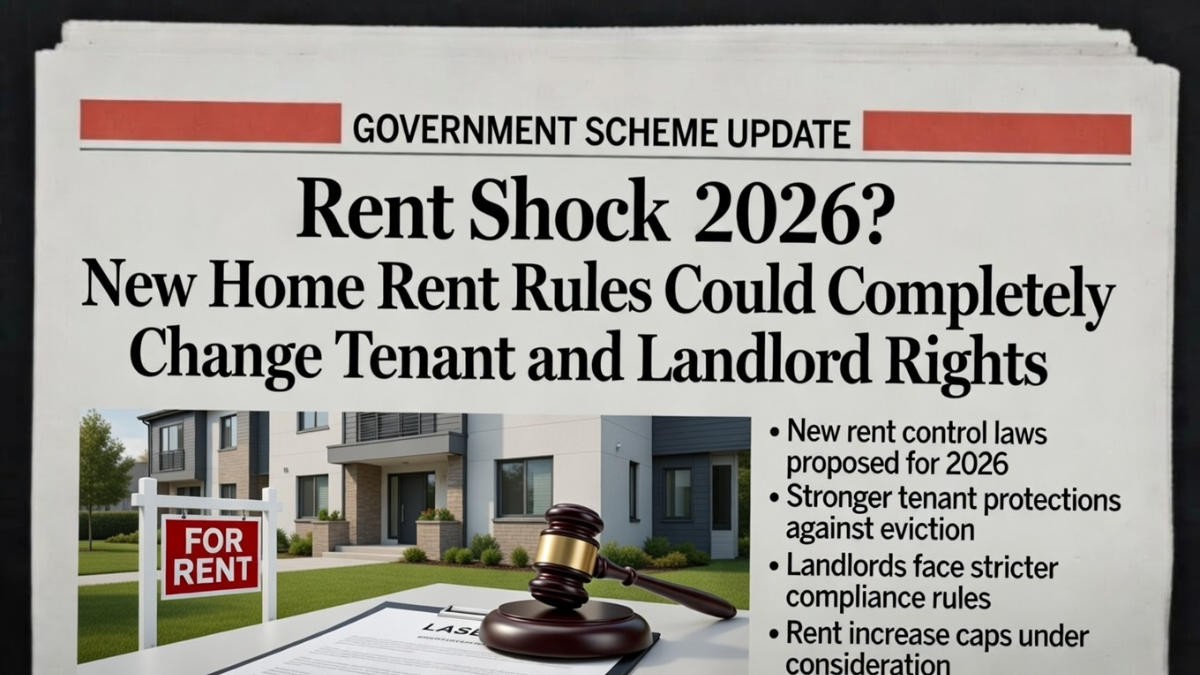
India’s rental market is heading toward a major shift in 2026 as updated home rent guidelines aim to bring transparency, fairness, and accountability to both tenants and landlords. With rising urban migration and increasing disputes over deposits, eviction, and rent hikes, the new framework is expected to reshape how rental agreements work across states.
If you live in a rented house or own rental property, these upcoming changes could directly impact your rights and responsibilities.
Why Home Rent Rules 2026 Are in Focus
Rental disputes have grown rapidly in metro cities and expanding urban hubs. Issues related to sudden eviction, unreasonable rent hikes, and delayed security deposit refunds have led to demands for stronger regulatory clarity.
The proposed updates are aligned with principles introduced under the Model Tenancy Act, which was designed to balance tenant protection with landlord security.
States are gradually adapting these guidelines to modernize the rental ecosystem.
Key Changes Expected Under 2026 Guidelines
The updated rules are focused on improving transparency in rental agreements and reducing conflicts. Written agreements are expected to become mandatory in most jurisdictions, with digital registration encouraged for better record keeping.
Rent revisions may require prior written notice within a defined time frame. Sudden arbitrary increases without formal communication may not be legally enforceable.
Clear timelines for refunding security deposits after property handover are also being emphasized to prevent disputes.
Security Deposit and Rent Hike Rules
One of the most debated aspects of rental arrangements is the security deposit amount. Under proposed guidelines influenced by the Model Tenancy Act framework, security deposits for residential properties may be capped at a reasonable limit, often equivalent to a few months of rent.
Landlords are required to provide written acknowledgment of deposit receipt. After tenancy ends, deductions must be justified with documented proof.
Rent increases will require advance notice, typically one to three months, depending on state adoption.
Tenant Protection Against Unlawful Eviction
Tenants may receive stronger safeguards against sudden eviction without valid grounds. Eviction procedures are expected to follow legally defined processes rather than informal pressure tactics.
Dedicated rent authorities or tribunals may handle disputes more efficiently, reducing the burden on traditional courts.
This move is aimed at encouraging rental housing growth while maintaining fairness.
Landlord Rights and Safeguards
The updated guidelines also protect landlords. Timely rent payment obligations are clearly defined. Tenants failing to pay rent within stipulated timelines may face legal consequences.
Property misuse or subletting without permission can also trigger eviction proceedings.
The balance between tenant rights and landlord interests remains central to the 2026 reform direction.
Impact on India’s Rental Market
Urban rental markets in cities like Mumbai, Delhi, Bengaluru, and Hyderabad may experience greater standardization in agreements.
Digital documentation, clearer rent revision rules, and structured dispute resolution mechanisms could increase investor confidence in rental housing.
Over time, transparent policies may encourage more property owners to formally enter the rental market.
What Tenants and Landlords Should Do Now
Tenants should review their rental agreements carefully and ensure all terms are documented in writing. Landlords should align their agreements with state notified guidelines once implemented.
Keeping digital copies of agreements, payment receipts, and inspection records can prevent future disputes.
Awareness is the key to avoiding unnecessary legal complications.
Conclusion
Home Rent Rules 2026 are set to transform India’s rental market by strengthening transparency, protecting both tenants and landlords, and formalizing dispute resolution processes. While exact implementation varies by state, the overall direction is toward fairness and accountability.
Whether you are renting or leasing property, staying informed about the latest guidelines will help you protect your interests in the evolving rental landscape.
Disclaimer: This article is for informational purposes only. Rental laws and implementation may vary by state. Readers should refer to official state government notifications for exact legal provisions.